Hail Hit Your Neighborhood? Here’s How to Know If Your Roof Was Damaged
Hailstorms can be loud, sudden, and stressful; especially in Minnesota where severe weather can move in fast. Even if your roof looks fine from the ground, hail can cause subtle damage that shortens shingle life and increases the risk of leaks months later.
If you’re wondering whether you should call a professional, this guide will help you understand what hail damage on roofs looks like, where to check first, and what steps to take so you can protect your home (and avoid bigger repairs down the road).
If you’d rather skip the guesswork, All Craftsmen Exteriors offers free, no-pressure hail inspections and can help you through the next steps, including documentation and insurance claim support. (See our Hail Damage Roof Repair service page).
First Things First: Stay Safe
Before we get into the signs of hail damage, a quick word of caution:
- Don’t climb on your roof right after a storm. Wet shingles can be extremely slippery.
- Use binoculars or a camera zoom from the ground if you’re doing a quick check.
- If you do need a closer look, use a stable ladder, and consider calling a professional instead.
A proper inspection often involves walking the roof and checking soft bruising that isn’t always visible from the ground. When in doubt, it’s safer (and smarter) to schedule a professional inspection.
What Does Hail Damage Look Like on a Roof?
Hail damage can vary depending on:
- Hail size and wind speed
- Roof age and shingle condition
- Roof pitch and direction (south/west slopes often take more impact)
- Roofing material (asphalt, metal, cedar, etc.)
In many cases, hail damage isn’t a single dramatic “hole.” It’s often bruising beneath the surface that weakens shingles over time.
How to Spot Hail Damage on Asphalt Shingles
Most Minnesota homes have asphalt shingles, so here are the most common hail-related issues we see:
1. Dark Spots or “Bruises”
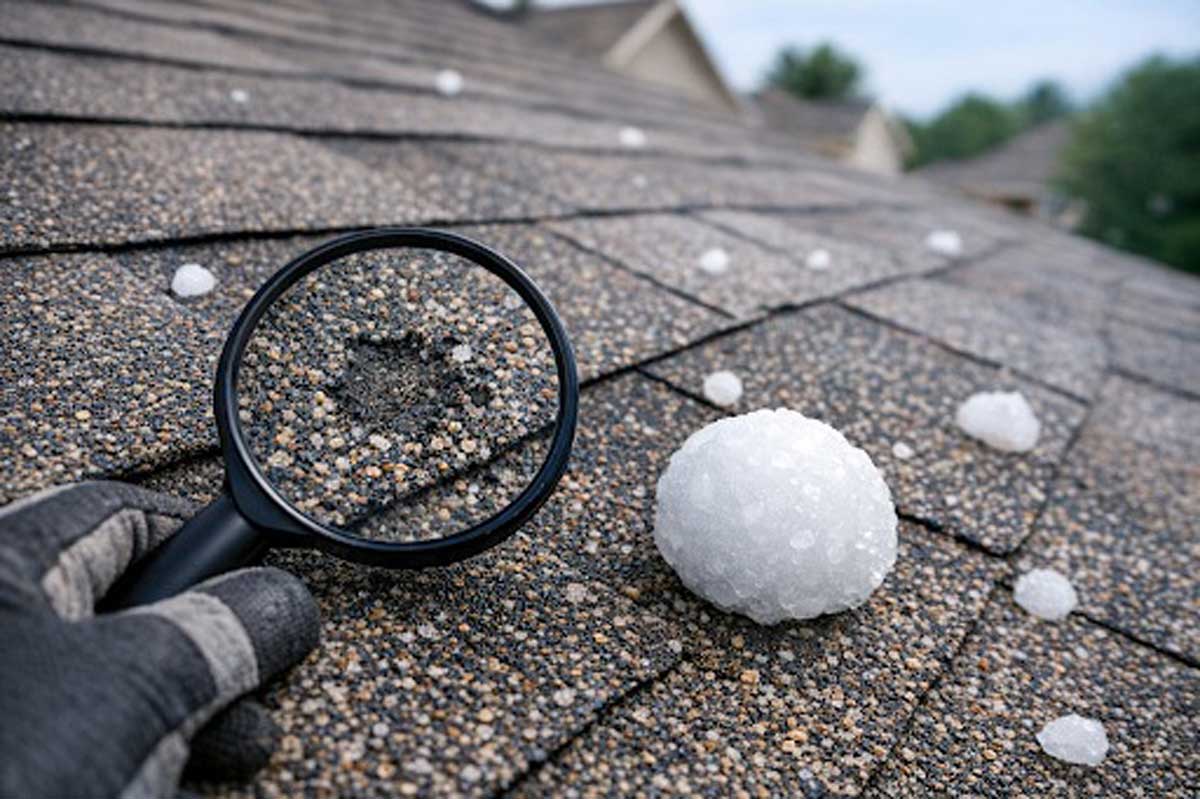
Hail can cause impact marks that appear as small dark circles. Sometimes the shingle surface looks slightly indented. A roofer may gently press the area to check for a soft “bruise” underneath the granules.
2. Granule Loss and Bald Patches
Hail can knock protective granules loose. Look for:
- Bare spots where the shingle looks smoother or darker than surrounding areas
- Exposed asphalt or mat
- Granules collecting in gutters and downspouts
Granules protect shingles from UV breakdown. When they’re gone, the shingle can age faster and become more likely to crack.
3. Cracked, Split, or Missing Shingle Tabs
Large hail can fracture shingle tabs or cause cracking that may not immediately leak—but can become a problem with the next heavy rain.
4. Random Patterning
Hail impacts tend to be random across a roof surface rather than in perfectly straight lines. That “randomness” is one clue inspectors use to distinguish hail damage from manufacturing defects or normal wear.
Check These “Clue” Areas Around Your Home
Even if you don’t see obvious roof damage from the ground, these areas often show storm impact quickly:
Soft Metal Dents
Look for dents or dings on:
- Gutters and downspouts
- Metal fascia or drip edge
- Roof vents and flashing
- A/C fins (take care not to touch sharp edges)
If you see fresh dents on soft metals, it’s a strong sign your roof may have been hit hard enough to justify a closer inspection.
Siding, Window Screens, and Outdoor Items
Hail can leave marks on:
- Window screens (tears or “peppering”)
- Garage doors
- Siding faces
- Deck furniture, grills, and patio covers
Damage in multiple areas often indicates the storm was strong enough to affect your roof system too.
Where Roof Hail Damage Shows Up Most Often
A professional hail inspection typically focuses on vulnerable roof zones first:
- Ridges and hips (exposed high points)
- Eaves and lower edges (water shedding areas)
- Valleys (high-volume runoff channels)
- Roof penetrations like pipes, bath vents, and skylights
- South- and west-facing slopes (often take the brunt of wind-driven hail)
If your roof has multiple layers, older shingles, or previously repaired areas, it’s even more important to inspect carefully—hail can exploit weak points.
“Is This Hail Damage… or Just Normal Wear?”
This is one of the most common homeowner questions—and it’s a fair one.
Some issues that can look like hail damage (but aren’t) include:
- Blistering from heat/UV
- Foot traffic scuffs
- Manufacturing anomalies
- Aging shingles with uniform granule loss
That’s why storm assessments are best handled by a trained professional who can document findings and separate storm-related damage from typical aging.
What to Do Next After a Hailstorm
If you suspect hail damage, here’s the best sequence of steps to protect your home and keep the process moving smoothly.
Step 1: Document What You Can (Safely)
Take photos of:
- Hailstones (if possible) next to a coin or ruler for size reference
- Dents on gutters, downspouts, and vent caps
- Damage to siding, screens, and outdoor items
- Any water staining or leaks inside the home
Even a few clear photos can help establish a timeline and support your next steps.
Step 2: Schedule a Professional Roof Inspection
A professional inspection can:
- Confirm whether damage is present
- Identify repair vs. replacement needs
- Document damage clearly
- Help prevent missed issues that lead to leaks later
You can request a free inspection here.
Step 3: Prevent Secondary Damage
If you notice active leaking, water stains, or missing shingles, don’t wait. Temporary measures (like tarping) can prevent more interior damage while you plan permanent repairs.
Step 4: Contact Your Insurance Company (If Damage Is Significant)
Many homeowner policies cover storm-related roof damage, but coverage and timelines vary by policy. If your inspection indicates meaningful hail damage, your contractor can help provide the documentation you may need.
All Craftsmen Exteriors regularly works with insurance claim projects and can help guide you through documentation and scope clarity. Learn more about how we can help.
Step 5: Avoid “Storm Chasers” and High-Pressure Sales
After major hail events, out-of-town crews often flood neighborhoods.
A few red flags to watch for:
- High-pressure “sign today” tactics
- No local address or licensing information
- Vague paperwork or missing insurance details
- Promises that sound too good to be true
Choosing a local, established roofing contractor means accountability, warranty support, and a team that will still be here long after the storm.
Do You Need a Repair… or a Full Roof Replacement?
This depends on the severity and distribution of damage.
You may be a candidate for repair if:
- Damage is isolated to a small area
- Shingles match is possible
- The roof is newer and overall condition is strong
A full replacement may be recommended if:
- Damage is widespread across multiple slopes
- Shingles are brittle or near end-of-life
- Multiple components (vents/flashings) are compromised
- A consistent repair won’t restore long-term performance
If replacement is needed, our team can walk you through material options and best-practice installation. Learn more here: Total Roof Replacement.
Common Questions About Roof Hail Damage
How soon should I get my roof inspected?
As soon as it’s safe. The earlier you document damage, the easier it is to connect issues to the storm event and prevent future leaks.
Can hail damage cause leaks right away?
Sometimes. But it’s also common for hail damage to create weak points that fail later—especially after another storm, freeze/thaw cycles, or heavy winds.
Will my roof always look obviously damaged?
No. Bruising and granule loss can be subtle. A roof can “look fine” from the yard and still have meaningful hail impacts.
What if my roof was already older before the storm?
Hail can accelerate aging on an already worn roof. A professional inspection can help determine whether storm damage changed the roof’s condition enough to require repairs or replacement.
Need a Hail Damage Roof Inspection? We’re Here to Help.
Hail damage isn’t always obvious, but ignoring it can lead to leaks, mold, and expensive interior repairs.
If you think your roof may have been hit, All Craftsmen Exteriors can provide a free inspection, clear documentation, and honest recommendations—whether you need a simple repair or a full replacement.
Contact us online
Or call 952-898-4680 to get started with a local team that knows Minnesota roofing inside and out.